Spec Battle: Geekom A5 vs 8849 Tank 4 Rugged Phone — Is It Worth Upgrading?
Short answer: It depends on what problem the buyer is trying to solve. The Geekom A5 is a compact desktop-class mini PC focused on desktop productivity, media, and light workstation tasks; the 8849 Tank 4 is a purpose-built rugged Android smartphone with extreme battery life, a built-in projector, and hardware aimed at outdoor and industrial use. One is not a direct drop-in upgrade for the other—each serves different real-world needs. This article lays out the specs, practical use cases, pros and cons, and a buying guide so readers can judge whether an upgrade is sensible for their situation.
Introduction
Buyers frequently wrestle with the question “should I upgrade?” when new hardware appears with dramatic claims: bigger batteries, exotic sensors, or compact computing power. The Geekom A5 and the 8849 Tank 4 occupy very different niches. The Geekom A5 is a palm-sized mini PC (often used with an external monitor, keyboard and mouse) that targets home office, media center, and light creative workloads. The 8849 Tank 4 is a ruggedized smartphone designed for outdoor workers, first responders, and adventure seekers who need long runtime, durability, and unusual utilities like a projector and extra-bright lamp.
Comparing them side-by-side is less about raw “which is better” and more about “which is better for this use case.” The following sections unpack both devices in detail, highlight strengths and weaknesses, present a concise spec comparison, and conclude with practical guidance for prospective buyers.
Detailed product analysis
Geekom A5 — compact performance for desktop tasks
The Geekom A5 is a mini PC that aims to provide an affordable, compact alternative to a traditional desktop. Key characteristics include a low-power Intel processor (N-series/N100 family in many configurations), LPDDR memory options (typically 8–16GB), and an internal SSD (commonly 256–512GB, with M.2 expansion on some models). The device typically runs Windows 11 or a Linux distribution and supplies standard desktop I/O: HDMI/DisplayPort output, USB-C, multiple USB-A ports, and wired Ethernet. Its small footprint and quiet operation make it attractive for use as a home office machine, streaming media center, or classroom deployment.
Performance-wise, the A5 targets energy-efficient multi-threaded workloads: web browsing with many tabs, office suites, video streaming, and light photo editing. Integrated Intel graphics handle 1080p and some 4K video playback well, and the SSD provides responsive boot and application load times. The device is not positioned as a gaming powerhouse or a substitute for a fully configured workstation, but it can comfortably handle everyday productivity.
Real-world use cases for the Geekom A5 include:
- Remote or hybrid workers who need a small, quiet desktop for documents, spreadsheets, and video conferencing.
- Media centers or HTPC setups where compactness and low power draw are priorities.
- Classrooms, digital signage, or kiosks where a small, manageable PC is required.
- Developers or students who need a secondary machine for compiling lightweight projects or running local test servers.
8849 Tank 4 Rugged Phone — a toolkit for the field
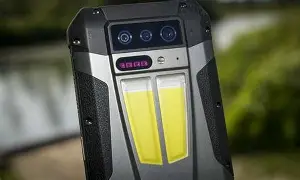
The 8849 Tank 4 (also seen under the Unihertz/8849 family) is a rugged Android smartphone that doubles down on durability and long runtime. Notable hardware highlights include a very large battery (claimed in many versions around 11,000mAh or more), fast wired charging, MIL-grade physical protection, and an IP68/IP69 water-and-dust resistance rating. The Tank 4 stands out through specialty features: a built-in DLP projector for low-light briefings or media playback, a high-lumen camping light, and a suite of sensors (barometer, altimeter, temperature/thermometer, pulse oximeter in some variants) aimed at outdoor and industrial users.
In terms of performance, the Tank 4 commonly uses a mid-range MediaTek Dimensity chipset that balances power efficiency and responsiveness for Android apps, navigation, and camera processing. Cameras often include a high-resolution main sensor and a dedicated night-vision sensor or telephoto module depending on the variant. Connectivity covers 5G, Wi‑Fi 6/6E (on some builds), Bluetooth, NFC, and multiple global GNSS systems for reliable location tracking.
Practical real-world use cases for the Tank 4 include:
- Field technicians and utility workers who need a durable phone with long battery life and physical resilience.
- Outdoor enthusiasts, guides, and campers who benefit from the integrated projector and high-lumen light.
- Emergency preparedness kits where long standby and multi-function tools (torch, projector, sensors) are valued.
- Industrial settings where a device must survive drops, dust, and splashes while providing mapping, documentation, and communication.
Key specifications at a glance
| Specification | Geekom A5 (typical) | 8849 Tank 4 Rugged Phone (typical) |
|---|---|---|
| Device type | Mini PC (desktop) | Rugged Android smartphone |
| Processor | Intel N-series (e.g., N100) low-power CPU | MediaTek Dimensity mid-range SoC |
| Memory | 8–16GB LPDDR | 8–12GB LPDDR (some variants support virtual RAM) |
| Storage | 256–512GB NVMe SSD (expandable) | 128–512GB UFS (microSD support) |
| Display | Requires external monitor | 6.7–6.8" AMOLED/LCD screen, high refresh (varies) |
| Battery / Power | External AC adapter (desktop use) | Large internal battery (10,000–12,000mAh), fast charging |
| Durability | Consumer-grade (not rugged) | IP68/IP69, MIL‑STD drop resistance |
| Special features | Small form factor, multiple video outputs, silent operation | Built-in DLP projector, 1200+ lumen flashlight, advanced sensors |
| Operating system | Windows 11 or Linux | Android 13/14 (vendor dependent) |
Pros & Cons
Geekom A5
- Pros: Compact footprint; low noise and low power consumption; standard desktop OS and app ecosystem; good for multitasking web and office workloads; straightforward I/O for monitors and peripherals.
- Cons: Not portable in the sense of a handset; requires monitor, keyboard and mouse; limited to light-to-moderate compute—unsuited for heavy 3D rendering or modern AAA gaming; no integrated battery for mobile use.
8849 Tank 4 Rugged Phone
- Pros: Exceptional battery life and ruggedness; multifunctional tools (projector, high-lumen light) for fieldwork and outdoor use; full mobile connectivity (cellular, GPS); Android ecosystem and apps for mapping, documentation, and communication.
- Cons: Heavier and thicker than mainstream phones; mid-range SoC—less capable than flagship chips for sustained heavy workloads; projector brightness and image size are limited by physics (best for small rooms/dark environments); bulky for everyday pocket carry.
How prospective buyers typically decide
Buyers normally think in terms of tasks. The most important questions are:
Discover deals on Laptops & Computers — updated daily.
Shop Amazon →- What primary tasks need to be accomplished on the device? (e.g., document editing, remote access, mapping, on-site photo documentation)
- Is mobility essential, or is a small fixed desktop acceptable?
- How important is ruggedness, battery life, and physical durability?
- Are there specialized needs (projectors, sensors, specific ports, compatibility with peripherals)?
For someone who spends most of the day away from a desk—navigating rough terrain, inspecting infrastructure, or supervising outdoor sites—the Tank 4’s durability, communication capabilities, and long runtime are compelling benefits. For someone who primarily needs a low-footprint desktop replacement for home or office, the Geekom A5 delivers a far better productivity experience because it supports full Windows applications, multiple monitors, and desktop-grade I/O.
Comparison by real-world scenarios
Field technician / utility worker
The Tank 4 wins. Rugged hardware, long battery life, integrated torch and projector for quick briefings, and Android apps for specialized inspection workflows make it a clear fit.
Home office or small business owner
The Geekom A5 wins. A real desktop OS, support for multiple monitors, document editing suites, and predictable performance for office workflows are essential. The Tank 4 can serve as a secondary device but cannot replace a desktop environment for extended productivity tasks.
Traveler / camper who values multimedia and emergency preparedness
The Tank 4 is attractive for its projector and flashlight, robust battery, and compact single-device convenience. However, if multimedia streaming in a dedicated living space is the priority, a Geekom A5 hooked to a TV or monitor offers a more comfortable viewing experience.
Classroom or kiosk deployment
The Geekom A5 is preferable because it is easy to lock down, manage, and integrate with existing peripherals. The phone’s form factor and OS make it less convenient for these deployments.
Buying guide — what to check before upgrading
When deciding whether to upgrade to either device, the buyer should consider the following checklist:
1. Clarify the primary use case
Match the device to tasks. If the checklist begins with “I need a device for desktop applications,” the mini PC is the right starting point. If the checklist begins with “I need a device that survives drops, long treks, and works off-grid,” the rugged phone is appropriate.
2. Assess software and ecosystem needs
Determine whether the required software is desktop-only (Windows/Linux applications) or available as mobile apps. Offline mapping, barcode scanning, and many field utilities are mobile-first; complex desktop applications (e.g., full Adobe apps, Visual Studio, heavy databases) require a PC.
3. Check connectivity and peripheral needs
For external devices like printers, dual monitors, wired Ethernet, or specialized USB hardware, the Geekom A5 offers easier integration. For cellular connectivity, satellite or advanced GNSS, and direct voice/data communications, the Tank 4 is the clear option.
Discover deals on Laptops & Computers — updated daily.
Browse Now →4. Evaluate mobility versus permanence
Consider where the device will live: in a pocket/on-site or on a desk/stationary. Even though the Geekom A5 is portable in a bag, it is still a desktop environment; the Tank 4 is designed to be carried and used in motion.
5. Consider battery and power constraints
Tank 4 offers extreme single-device uptime. If uninterrupted mobile operation is vital, the phone is superior. If continuous AC power is available and productivity is the main need, the mini PC’s reliance on mains power is a non-issue.
6. Factor in ruggedness and environmental tolerance
For dusty, wet, or shock-prone environments, an IP68/IP69-rated device and MIL‑STD drop ratings matter. The Tank 4’s ruggedization provides insurance against field conditions that would damage typical consumer mini PCs.
7. Long-term support and repairability
Investigate the manufacturer’s warranty, spare parts availability, and community support. Mini PCs often have easy-to-upgrade storage and memory (depending on the model), while rugged phones may require official service centers for significant repairs.
Cost considerations
Pricing and value must be judged against the use case. The Tank 4 typically trades portability and ruggedized features for a premium over mainstream mid-rangers, but for buyers who truly need those features the cost per day of reliable battery and durability can be justified. The Geekom A5 often represents strong value for anyone replacing a bulky tower or who needs a quiet, efficient home desktop. Total cost of ownership includes accessories—monitors and input devices for the mini PC, protective cases and potentially satellite or extended warranty options for the phone.
Verdict — is it worth upgrading?
The decision to upgrade to either a Geekom A5 or an 8849 Tank 4 depends entirely on the buyer’s priorities:
- If the upgrade goal is improved desktop productivity, lower noise, and a space-saving workstation, the Geekom A5 is worth upgrading to—especially for users moving away from older, bulkier desktops or power-hungry small-form-factor PCs.
- If the upgrade goal is longer field uptime, resilience to environmental hazards, and specialized on-device tools (projector, extreme flashlight, specific sensors), then the 8849 Tank 4 is worth the investment for technicians, outdoor professionals, or emergency-focused users.
- For those hoping one device will cover both sets of needs well, reality is compromise: the Tank 4 will not provide a PC-level desktop experience, and the Geekom A5 will not replace the portability and rugged utility of a field-ready smartphone.
Conclusion
Both the Geekom A5 and the 8849 Tank 4 are sensible upgrades—but for different audiences. The Geekom A5 modernizes the desktop experience in a compact, efficient package that suits home office, media, and light content creation roles. The Tank 4 is a specialized mobile tool that answers the demands of rugged field work, extended off-grid use, and multi-tool convenience. The right upgrade is the one that aligns with daily workflows: choose the A5 to optimize a desk-centric setup; choose the Tank 4 when rugged mobility and battery endurance are mission-critical.