Head-to-Head: Tcl Rayneo X3 Pro Smart Glasses vs Minisforum Ms S1 Max Mini Pc (Detailed Comparison)
Introduction
Wearable computing and ultra-compact desktops occupy very different niches in today's technology landscape, yet both promise to reshape how people interact with content, work, and play. This head-to-head comparison examines the Tcl Rayneo X3 Pro Smart Glasses and the Minisforum Ms S1 Max Mini Pc, two devices aimed at users who prioritize compactness and new interaction models. One is a wearable display designed to free screens from desks and pockets; the other is a small-but-capable desktop replacement intended to tuck behind a monitor or live in a living room media center.
This article takes an editorial, buyer-focused look at both products — exploring real-world use cases, strengths and weaknesses, and what buyers typically care about: performance, usability, connectivity, battery and power, software ecosystem, and value. It includes in-depth analysis, pros and cons lists, a side-by-side comparison table, and a practical buying guide to help readers decide which device better fits their needs.
Product overview and positioning
Tcl Rayneo X3 Pro Smart Glasses
The Rayneo X3 Pro comes from TCL's consumer electronics ecosystem and represents the latest in "smart glasses" — wearables that overlay information or project a private display into the user's field of view. These devices are aimed at people who want hands-free access to notifications, navigation, media, and lightweight productivity without constantly looking at a smartphone.
Key buyer appeal: a private, portable display for media consumption, heads-up notifications, quick interactions while commuting or walking, and niche enterprise tasks like hands-free inventory lookups or remote support.
Minisforum Ms S1 Max Mini Pc
The Minisforum Ms S1 Max is part of the growing mini-PC category that packs desktop-level capabilities into a tiny chassis. These systems are marketed toward users who need a full Windows (or Linux) experience in a compact form factor — for use as an office workstation, home media server, digital signage controller, or lightweight gaming and content-creation machine.
Key buyer appeal: full desktop software compatibility, relatively strong CPU/GPU options in a small footprint, multiple display outputs, and greater expandability compared with ultraportable devices.
Detailed product analysis
Design and ergonomics
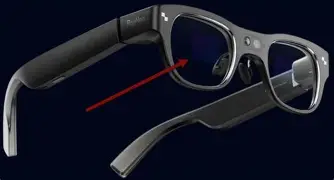
The Rayneo X3 Pro prioritizes comfort and discretion. Smart glasses are judged on wearability: weight distribution, nose-bridge fit, and whether the frame interferes with regular eyewear. Good designs put most of the device mass around the temples and temples-mounted battery modules to avoid nose pressure. Users care about how they look wearing the glasses and whether prolonged use causes fatigue.
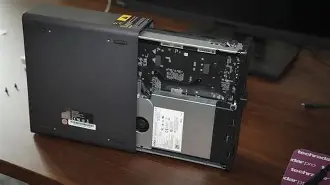
The Minisforum Ms S1 Max trades ergonomics for environmental fit: it is designed to be tucked under a monitor, mounted behind a display, or placed on a shelf. Noise, thermal behavior, and port placement are central to user experience. Buyers pay attention to whether the unit can run quietly under load and whether it remains cool enough to avoid throttling during everyday productivity or media tasks.
Display and visual experience
Smart glasses like the Rayneo X3 Pro do not replace large external monitors but offer a personal microdisplay. The visual experience is measured by image clarity, color reproduction, field-of-view, and whether text is readable for extended periods. Real-world users value crispness for reading notifications and watching short video content; they are less tolerant of visible screen-door effects or poor contrast.
Shop the latest Laptops & Computers picks on Amazon.
Browse Now →The Minisforum, by contrast, outputs to conventional monitors or TVs. Display quality therefore depends on the attached monitor, but the mini PC's integrated graphics and available video outputs determine support for high resolutions and multiple displays. For buyers using the device as a home theater PC, HDMI/DisplayPort support and HDR passthrough are important considerations.
Performance and real-world use
Smart glasses focus on low-power processing for tasks like media streaming, navigation overlays, voice assistants, and lightweight apps. The Rayneo X3 Pro is aimed at users who will perform brief interactions — checking messages, following step-by-step instructions, or consuming short-form videos — rather than running desktop-grade software.
The Minisforum Ms S1 Max is intended for sustained workloads. A mini PC typically runs office suites, web browsers with many tabs, development tools, and even light content creation. Real-world buyers evaluate CPU multithreaded performance, single-thread speed (for responsiveness), integrated GPU capability for video decoding and light gaming, and thermal headroom for prolonged tasks.
Battery, power, and noise
Battery life is a crucial metric for the Rayneo X3 Pro. Users expect several hours of active use for media and intermittent interactions; standby times and charging convenience matter. The balance between display brightness and battery longevity is a frequent buyer trade-off, especially for outdoor use where high brightness drains batteries faster.
The Minisforum depends on wall power. Buyers focus on power draw under load, fan noise, and the trade-offs of passive vs active cooling. In quiet environments — living rooms, recording spaces, or shared offices — low fan noise and effective thermal management significantly improve the user experience.
Connectivity and expandability
For smart glasses, connectivity centers on wireless standards: robust Bluetooth for input peripherals and phone tethering, and Wi‑Fi for streaming. Some models also support USB-C wired modes for video input and charging. The availability of companion apps and compatibility with phone operating systems are frequent buyer concerns.
The Minisforum typically offers an array of USB ports, Ethernet, Wi‑Fi, Bluetooth, and multiple video outputs. Expandability — user-replaceable RAM and storage — is a major advantage over many ultraportables and wearables. Professionals value the ability to upgrade memory or add an NVMe SSD to keep the system relevant for longer.
Software ecosystem and privacy
Smart glasses face the dual challenge of providing useful applications while addressing privacy concerns. Buyers often worry about cameras on wearables, data collection, and how notifications are displayed in public. A mature companion app ecosystem and transparent privacy controls increase buyer confidence.
Mini PCs are largely standard computing platforms, so software availability is wide and familiar. Buyers care about driver support, compatibility with peripherals, and the ease of installing and maintaining the operating system. For companies deploying many units, manageability and remote management features can be important.
Find top-rated Laptops & Computers products at great prices.
See Deals →Pros & Cons
Tcl Rayneo X3 Pro Smart Glasses
- Pros: Hands-free, private display ideal for on-the-go notifications and short-form media; lightweight and portable; useful for AR-assisted workflows and quick reference tasks; discreet when compared with larger headsets.
- Cons: Limited to lightweight apps and media; shorter battery life under continuous high-brightness use; small display area not suitable for long-form productivity; app ecosystem and developer support may be limited compared to phones and PCs.
Minisforum Ms S1 Max Mini Pc
- Pros: Full desktop software support in a tiny chassis; multiple ports and display outputs for flexible setups; upgradeable RAM and storage in many configurations; suitable for productivity, media playback, and light content creation.
- Cons: Requires external peripherals (monitor, keyboard, mouse); not as mobile as a wearable or laptop; thermal management can influence sustained performance; quieter cooling may come at a price premium.
Comparison table
| Category | Tcl Rayneo X3 Pro Smart Glasses | Minisforum Ms S1 Max Mini Pc |
|---|---|---|
| Type | Wearable microdisplay — private, head-mounted screen | Small form-factor desktop — compact PC to attach to displays |
| Primary use cases | Hands-free notifications, short video, navigation, AR overlays, field work | Office productivity, home media center, light gaming, edge computing |
| Performance | Low-power SoC for lightweight apps and streaming | Desktop-class processors (config-dependent) for sustained workloads |
| Display | Microdisplay with limited FOV — private view, not immersive desktop replacement | Dependent on external monitor — supports high-resolution outputs and multiple displays |
| Battery & power | Battery-powered; hours of active use varies with brightness and use | Mains powered; attention on thermal design and fan noise |
| Connectivity | Bluetooth, Wi‑Fi, often USB-C tethering | Ethernet, Wi‑Fi, multiple USB, HDMI/DP, possible expansion slots |
| Portability | Highly portable; wearable | Very small, but requires external accessories |
| Best for | Users wanting quick, hands-free interactions and on-the-go media | Users needing a full desktop environment in a tiny footprint |
Real-world use cases: who should consider which device?
The Rayneo X3 Pro appeals to commuters, field technicians, and people who split attention between the world and digital information. Example scenarios include:
- Delivery drivers or warehouse workers needing hands-free reference to routing or inventory systems.
- Commuters who want a private display for videos or podcasts without holding a device.
- Professionals conducting remote support calls who benefit from overlayed instructions while using both hands.
The Minisforum Ms S1 Max fits users who want desktop capabilities with minimal footprint. Example scenarios include:
- Home-office workers who need a small, quiet PC that sits behind a monitor.
- Media enthusiasts who want a compact HTPC for streaming, local video playback, or light transcoding.
- Developers and IT professionals who need a small lab machine or edge device for testing or remote deployments.
Buying guide — what to prioritize
Choosing between an advanced wearable and a mini PC is largely about the intended workflow. Consider the following criteria before buying.
For Rayneo X3 Pro buyers
- Comfort and fit: Try before buying if possible. Nose fit and temple pressure define whether the device can be worn for long sessions.
- Battery life: Consider typical use: short guided sessions vs continuous media playback. Prioritize models with swappable battery modules or fast-charging support if mobility is essential.
- Display legibility: Check text readability at typical viewing distances and whether brightness is sufficient for outdoor use.
- Companion app and ecosystem: Verify compatibility with the user's smartphone OS and whether key apps or workflows are supported.
- Privacy and camera policies: If the glasses include a camera, understand how data is stored and how the device signals recording to bystanders.
For Minisforum Ms S1 Max buyers
- Performance targets: Choose CPU and RAM configurations that match intended tasks. For heavy multitasking or light content creation, prioritize higher core/thread counts and more RAM.
- Cooling and noise: Read reviews for thermal throttling and fan noise. For living-room or recording use, quiet operation is critical.
- Ports and expandability: Make sure there are enough USB ports, video outputs, and upgrade paths (M.2 slots, SO-DIMM RAM slots) for future-proofing.
- Operating system and drivers: Confirm OS support, driver maturity, and whether the vendor provides BIOS/firmware updates.
- Mounting options: If the plan is to hide the device behind a monitor, verify VESA compatibility and cable routing possibilities.
Cost and value considerations
Smart glasses and mini PCs rarely target the same price band for the same reasons. Smart glasses add value through novelty, mobility, and new interaction patterns; buyers should weigh how often those benefits will be realized against the premium for a wearable. Minisforum mini PCs offer tangible compute capacity that can replace a bulky desktop; for many, the value is measured in replaceable hardware and long-term utility.
When evaluating value, ask: Will the device solve a recurring workflow problem? For the glasses, is the hands-free display something that changes daily tasks, or is it an occasional convenience? For the mini PC, will it replace an existing workstation, reduce desk clutter, or serve multiple roles (media, work, light gaming)? The right answer depends on real daily use, not hypothetical capabilities.
Conclusion
The Tcl Rayneo X3 Pro Smart Glasses and the Minisforum Ms S1 Max Mini Pc represent two distinct approaches to compact computing. The Rayneo X3 Pro is compelling for those who prioritize mobility, hands-free interactions, and a private microdisplay for short sessions and specific workflows. The Minisforum Ms S1 Max is a practical choice for users who need full desktop-class capabilities in a small package, with the flexibility to upgrade and connect multiple displays.
Ultimately, the decision comes down to workflow: choose the Rayneo X3 Pro if hands-free access and wearable convenience genuinely change how tasks are completed; choose the Minisforum Ms S1 Max if desk or media-center consolidation, desktop software compatibility, and upgradeability are primary concerns. Both devices deliver value within their domains — the right pick depends on whether the buyer's daily life is better served by a wearable display or a compact, full-featured PC.