A Professional's Take on the New Dell Chromebook 3120
Category: Laptops
Introduction
The Dell Chromebook 3120 is presented as a compact, education-focused Chromebook that aims to balance durability, manageability, and everyday productivity. In this review, a professional perspective examines how well the 3120 meets the needs of typical buyers—students, educators, and mobile professionals who prioritize portability, battery life, and ease of IT administration. Rather than an enthusiast’s spec chase, the focus here is on real-world behavior: day-to-day performance, ergonomics, build quality, and long-term ownership considerations.
Product overview and positioning
The Dell Chromebook 3120 sits in the entry-level to mainstream Chromebook segment. It is designed primarily for classroom deployment and light productivity tasks, with an emphasis on robustness and predictable Chrome OS behavior. Buyers looking for heavy content creation, 3D work, or sustained high-load processes should temper expectations; this device is optimized for web apps, cloud-first workflows, and the Android app ecosystem available through Chrome OS.
Design and build quality
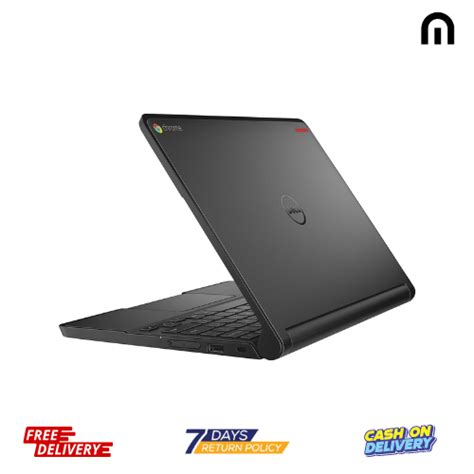
The 3120’s chassis is compact and utilitarian. The focus is durability rather than premium aesthetics: reinforced edges, a simple matte finish, and a keyboard designed to withstand frequent use. The hinge tension and lid stiffness are engineered for repeated opening and closing in a classroom environment. The keyboard commonly features a spill-resistant design, and keycaps are raised for tactile feedback that helps typing accuracy in prolonged sessions.
From a professional viewpoint, the trade-off between weight and toughness is well judged: the device remains portable for daily commutes and classroom carts while offering protection against the typical knocks and bumps of everyday handling.
Display and multimedia
The Chromebook 3120 typically features an 11–12-inch HD-class display optimized for clarity rather than cinematic color fidelity. For most buyers—students reading documents, professionals in remote meetings, and users navigating web applications—the panel is perfectly serviceable. Viewing angles and brightness levels are adequate for indoor use, though outdoor visibility in direct sunlight is limited as with many matte-screen Chromebooks.
Speakers are tuned for voice clarity rather than musical richness, which aligns with the device’s intended usage: virtual classrooms, video calls, and educational media. For extended media consumption or collaborative listening, a pair of headphones or external speakers will remain the sensible choice.
Keyboard, trackpad, and input ergonomics
One of the Dell Chromebook 3120’s stronger areas is its input experience. The keyboard generally provides good travel for its class and a layout optimized for Chrome OS (search key, dedicated brightness and volume controls). For professionals who type for hours—teachers preparing lesson plans, students writing essays, or staff handling emails—this is an important advantage over ultra-thin, shallow keyboards.
The trackpad is responsive and supports Chrome OS gestures. Precision is comparable to other devices in the segment; for users who require higher cursor fidelity for design work, an external mouse is still recommended.
Performance and day-to-day use
The 3120 is positioned for light-to-moderate workloads. Typical configurations offer modest RAM and onboard eMMC storage; this aligns with Chrome OS’s cloud-centric model but limits local multitasking and large-file handling. In practice, the device handles tabs, web apps, document editing, and video conferencing without drama when used within those constraints.
Shop the latest Laptops & Computers picks on Amazon.
Browse Now →Real-world performance advice: expect smooth behavior with single to moderate multitasking (a dozen-ish browser tabs, a Google Docs session, and a video call). Heavy browser tab hoarding, large local media libraries, or virtualization workloads will expose the device’s limitations. IT administrators and buyers should match configuration (RAM and storage) to intended use—more RAM for multi-tab heavy users, and more local storage if offline files are necessary.
Battery life
Battery performance is one of the practical decision points for buyers who work outside of dedicated charging stations. The 3120 is engineered to last a full school day or a typical workday under conservative use: document work, presentations, and occasional video. Real-world battery life ranges with workload, display brightness, and connectivity use. In mixed usage that includes video calls, the device delivers competitive endurance for its class—sufficient for most users who prioritize mobility without frequent charging.
Ports and connectivity
Connectivity choices reflect the device’s utility-first approach: a mix of USB-C and USB-A ports, a 3.5mm audio jack, and a microSD slot for expandable storage are commonly present. Wi‑Fi and Bluetooth implementations support modern standards which matter for online classes, cloud backups, and peripheral pairing. For buyers who need frequent wired displays or multiple external drives, a USB-C hub or docking solution is a practical addition.
Software, security, and manageability
Chrome OS remains a major selling point for institutional buyers. The platform offers fast boot times, automated updates, integrated security features, and a predictable lifecycle. The 3120 benefits from Chrome OS’s sandboxed model and frequent patches. Administrators will appreciate straightforward management via the Google Admin console or supported third-party solutions, enabling device enrollment, policy enforcement, and app management for fleets.
For enterprise or education customers, the ability to provision devices, push extensions, and control user sessions is a decisive advantage over unmanaged consumer laptops. The Chromebook 3120 is therefore suited for scenarios where centralized IT oversight is needed.
Real-world use cases
The Dell Chromebook 3120 fits a set of clear, practical scenarios:
- Classroom laptops: Ideal for shared labs, one-to-one student deployments, and testing stations due to its durability and simple management.
- Hybrid workers and mobile staff: Good for professionals who need a lightweight device for email, browser-based work, and video conferencing while traveling between locations.
- Secondary home machines: Useful as a family device for homework, browsing, video calls, and streaming, where cost-effectiveness and ease of maintenance matter.
- Fieldwork tablets replacement: When paired with cloud-first workflows, it can serve as a replacement for tablets in contexts that require a physical keyboard and predictable app behavior.
What buyers typically care about — and how the 3120 addresses these points
Buyers usually ask the same questions: durability, battery life, performance, value, and manageability. The 3120’s strengths lie in its predictable Chrome OS experience, ruggedized build for education use, and battery life that covers common daily routines. Buyers sensitive to display resolution, raw CPU power, or local storage capacity should weigh upgrades or alternative devices. The 3120’s price-to-feature balance is attractive when the priorities are mobility, management, and simplicity.
Comparison table
| Model | Target use | Typical screen | Common RAM / Storage | Durability | Best for |
|---|---|---|---|---|---|
| Dell Chromebook 3120 | Education / Light productivity | 11–12" HD-class display | 4 GB RAM / 32 GB eMMC (typical) | Reinforced chassis, spill-resistant keyboard | Schools, mobile staff, secondary home laptop |
| Acer Chromebook 311 (comparable) | Budget education | 11.6" HD | 4 GB RAM / 32 GB eMMC | Compact build, modest reinforcement | Entry-level classrooms, budget buyers |
| Lenovo 100e / 300e (comparable) | Education with 2-in-1 options | 11.6" HD, optional touch | 4 GB RAM / 32 GB eMMC | Ruggedized for schools; drop-tested | Interactive classrooms, stylus-capable workflows |
Pros & Cons
Pros
- Durable construction geared toward everyday classroom and field use
- Simple, secure Chrome OS experience with straightforward fleet management
- Lightweight and portable for students and traveling professionals
- Responsive keyboard appropriate for extended typing
- Balanced battery life that typically covers a full school or workday
Cons
- Limited local storage in base configurations; heavy offline use requires upgrades or external storage
- Not suitable for heavy content creation or processor-intensive tasks
- Display is adequate but not class-leading for color-critical work
- Upgradability is limited—RAM is often soldered and storage typically eMMC
Buying guide: how to decide if the Dell Chromebook 3120 is right for a buyer
When considering the 3120, buyers should assess needs along a few practical dimensions. This guidance is shaped by what professionals and institutional purchasers typically evaluate.
1. Define primary use
If the intended use is document editing, web-based applications, learning management systems, or video conferencing, the 3120 is a strong candidate. If the work requires local video editing, heavy multitasking, or specialized desktop apps, a more powerful laptop or a Windows/macOS machine will be a better fit.
Looking for the best Laptops & Computers deals on Amazon?
View Offers →2. Select the appropriate configuration
Opt for higher RAM if multiple browser tabs and web apps will be the norm. For users who need offline access to files, consider configurations with larger onboard storage or plan for external storage options. IT buyers should standardize configurations to simplify support and staging.
3. Consider manageability and lifecycle
For schools and organizations, factor in Chrome OS update timelines and device enrollment options. Devices intended for fleet use should include Chrome Education Upgrade or equivalent management licensing if centralized policy control is required.
4. Evaluate warranty and support options
Organizations should review Dell’s warranty and on-site service offerings. Extended service plans and accidental damage protection can be cost-effective for classroom deployments where accidental drops and spills are statistically probable.
5. Check peripherals and accessories
Decide on necessary peripherals such as USB-C hubs, external monitors, or ruggedized cases. For tablet-like interactivity, verify whether a touch or 2-in-1 variant is needed—some comparable models offer convertible designs that better serve creative or annotation-heavy workflows.
6. Test for classroom and pairing workflows
For educators, a short pilot with a classroom set can reveal workflow frictions: printing, local media playback, learning app compatibility, and the performance impact of class-wide video conferencing. Piloting reduces surprises at scale.
Maintenance and long-term considerations
Maintenance for Chrome OS devices is generally lighter than for traditional laptops, but buy-side planning should include firmware update policies, user training for offline file handling, and secure provisioning processes. Encourage users to leverage cloud storage and sync features to reduce reliance on local media and simplify backups. For organizations, periodic review of deployed configurations against evolving curricular needs ensures devices remain fit for purpose over their lifecycle.
Conclusion
The Dell Chromebook 3120 is a pragmatic, well-positioned Chromebook for education and light productivity. Its strengths—durable design, manageable Chrome OS environment, and practical battery life—match the priorities of institutional buyers and mobile professionals who favor reliability and simplicity. While it is not aimed at power users who need high-end CPUs or large local storage, the 3120 delivers a predictable, low-friction user experience for the scenarios it targets. For schools, small businesses, and individuals seeking a no-nonsense, serviceable Chromebook, the 3120 deserves consideration alongside similarly priced contenders. The decision ultimately rests on matching configuration to use: when chosen for the right tasks, this Dell Chromebook provides dependable service and straightforward administration over time.