5 Hidden Features of the Box Red V2 You Must Know About
Category: Electronics
Introduction
The Box Red V2 has quietly become a favorite among keyboard enthusiasts, competitive gamers, and professionals who type for hours every day. On the surface it looks like a straightforward linear mechanical switch: light, smooth, and fast. Beneath that simplicity, however, are several design choices and subtle behaviors that materially affect feel, sound, and long-term reliability. This article outlines five lesser-known features of the Box Red V2, explains why they matter to real-world users, and offers practical guidance on how to get the most out of these switches when building or upgrading a keyboard.
What is the Box Red V2?
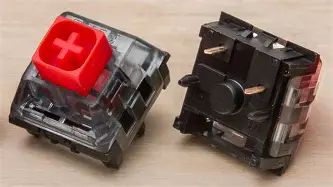
The Box Red V2 is a linear mechanical switch in the popular "BOX" family of switches. It combines a boxed stem design with a light actuation characteristic aimed at gamers and typists who prefer a low-resistance keypress. The V2 iteration introduced refinements to tolerances and materials intended to reduce wobble and improve the overall consistency across large batches.
Detailed Product Review and Analysis
On paper, the Box Red V2 reads like many other light linear switches: low actuation force, smooth travel, and MX-stem compatibility. In practice, there are nuances that separate it from generic linear offerings. The five hidden features described below are the most impactful in everyday use—affecting hold-up in tournaments, fatigue during long coding sessions, and the achievable sound profile for streamers or office environments.
Hidden Feature 1 — Boxed Stem Significantly Reduces Wobble
One of the hallmark design choices of the BOX family is the boxed stem. Unlike standard cross-shaped stems that can allow side-to-side play, the boxed stem encloses the stem with additional plastic walls. In the Box Red V2, tighter tolerances make this effect more pronounced. For users, reduced wobble translates to:
- More consistent keypress feel across the board, which helps when touch-typing or executing precise gaming macros.
- Improved compatibility with precision stabilizers—stabilized keys such as the spacebar and enter feel less "rattle-y" with the boxed stem acting as a more rigid guide.
- Less keycap tilt during off-center presses, which reduces the micro-variance that some typists find distracting.
Real-world use case: a competitive FPS player who relies on rapid, repeatable keypresses will notice fewer mis-registered inputs caused by sideways wobble during frantic sessions.
Hidden Feature 2 — Naturally Lower Spring Resistance and Faster Recovery
The Box Red V2 typically ships with a spring weight in the lower-mid range (commonly around the same light actuation territory as other 45–50 g-class linears). What many users miss is how this spring specification combines with the V2’s internal geometry to give a snappier return and a cleaner re-actuation behavior.
This matters for:
- High-RPM keypress sequences: less "stacking" or sluggish feel when rapidly strumming a key.
- Energy expenditure during long typing sessions—lighter springs contribute to reduced finger fatigue.
- Games requiring double-taps or rapid re-press; a quicker reset shortens the time to next actuation.
Practical tip: players and typists who prefer an even lighter or heavier feel can swap springs or add a shorter travel spring to tune recovery without changing the tactile linearity of the switch.
Hidden Feature 3 — Tolerance Improvements Make Lubing More Predictable
Switch lubricants and switch films are staples in the keyboard modding community. The V2’s manufacturing tolerances are tighter than the original BOX Red, which means the relationship between housing, stem, and spring is more consistent from switch to switch. The result:
Looking for the best Electronics deals on Amazon?
Browse Now →- Lubing produces more predictable outcomes—less risk of over-lubing some switches and under-lubing others in the same batch.
- Switch films (thin shims placed between housing halves) interact reliably with the stem, offering a repeatable reduction in ping and housing noise when used.
- Less variance in sound and feel across a set makes it easier to dial in a uniform typing profile.
Real-world use case: a builder tuning a 75% layout for streaming can achieve a consistent soundscape across alphanumeric keys and stabilizers without spending disproportionate time on quality control per switch.
Hidden Feature 4 — Improved Dust and Debris Resistance from Box Housing
The boxed housing helps reduce ingress of particles into the stem well. While not an IP rating or a guarantee against contamination, many users have reported better long-term smoothness compared to open-stem switches in heavy-dust environments or workshop builds.
Why buyers care:
- Longevity—office or home environments with pet hair or heavy dust will have less impact on key feel over time.
- Reduced maintenance—less frequent disassembly and cleaning required to maintain smoothness.
- Suitability for portable builds that live in backpacks or are transported to LAN events.
Practical tip: for outdoor or travel keyboards, pairing boxed switches with proper keycap profiles and a case foam further reduces the chance of contaminant-driven noise over time.
Hidden Feature 5 — Distinct, Tunable Sound Signature That Responds Well to Case Mods
Sound matters to many buyers: office workers want quiet, streamers want a pleasant on-stream sound, and hobbyists chase "thock" or "clack" personality. The Box Red V2's combination of housing material and stem geometry yields a relatively muted, slightly high-mid-forward linear tone out of the box. The V2 responds predictably to common case mods:
- Adding case foam or plate foam attenuates mid frequencies and emphasizes lower thock—popular for streamers who want a deep, non-harsh sound.
- Using switch films and stabilizer tuning removes thin housing resonances, producing a smoother sound with lower high-frequency artifacts.
- Different keycap materials (PBT thick vs. ABS thin) will change the perceived attack and sustain in consistent ways; V2’s predictable baseline makes these changes easier to evaluate.
Real-world use case: a content creator who records voiceovers alongside typing can reduce high-frequency noise with foam mods and mild lubing, keeping on-camera audio cleaner without sacrificing the rapid actuation gamers appreciate.
Pros & Cons
- Pros
- Boxed stem design reduces wobble for a more consistent feel
- Light actuation and quick reset favor gaming and fast typing
- Improved tolerances make lubing and modding outcomes repeatable
- Better resistance to dust/debris than open-stem designs
- Responsive sound profile that is easy to tune with mods
- Cons
- Some enthusiasts find boxed stems slightly less "airy" compared to very loose stems—preference-driven
- Out-of-the-box smoothness varies by batch; light lubing often still yields noticeable improvement
- May require minor stabilizer work for larger keys to realize full benefits
- Not a tactile switch—users seeking bump or click will need to look elsewhere
Comparison Table — Box Red V2 vs Common Alternatives
| Switch | Typical Actuation Force | Stem Compatibility | Wobble | Durability (approx.) | Sound Profile (default) |
|---|---|---|---|---|---|
| Box Red V2 | ~45–50 g (light) | MX-compatible boxed stem | Low | ~80M actuations | Muted, mid-forward linear; tunable |
| Cherry MX Red | ~45 g | Standard MX stem | Moderate | ~50M actuations | Neutral, slightly hollow |
| Gateron Red | ~45 g | MX-compatible | Moderate–High (varies) | ~50–60M actuations | Generally smooth, can be springy |
Buying Guide: What to Consider When Choosing Box Red V2
When evaluating whether the Box Red V2 is right for a build, buyers typically care about these practical factors. The following checklist focuses on real-world decisions—what to buy, what to expect, and how to prepare for tuning.
1. Intended Use: Gaming, Typing, or Hybrid?
If gaming is the primary use case, the Box Red V2’s light actuation and quick recovery are strong assets. For heavy touch typists who prefer tactile feedback, the linear nature may feel flat—consider tactile variants for typing-centric builds. For hybrid users, the V2 often strikes a good balance if combined with moderate keycap profiles and attention to stabilizer tuning.
2. Hot-Swap Compatibility and PCB/Plate Mounting
Confirm the target keyboard supports MX-compatible stems and whether it uses plate-mount or PCB-mount switches. V2 switches are generally compatible with both, but the solidity and case/plate material will influence final sound and feel. Hotswap sockets make it easy to experiment without soldering; for fixed builds, plan on soldering if the board requires it.
Looking for the best Electronics deals on Amazon?
See Deals →3. Pre-Lubed vs Unlubed Batches
Some sellers offer pre-lubed V2 switches while others ship dry. Even when pre-lubed, many enthusiasts re-lube to achieve their preferred feel. If time and effort are concerns, a pre-lubed batch can reduce initial work, but expect marginal gains from bespoke lubing sessions.
4. Spring Swaps and Weight Preferences
Because V2’s architecture supports consistent spring behavior, swapping springs is a reliable way to change actuation feel. Lighter springs reduce fatigue; heavier springs increase deliberate feedback and can reduce accidental presses. Consider trying a few spring weights with a handful of switches before committing to a full set.
5. Sound Tuning: Films, Foam, and Stabs
Plan for basic sound mods: switch films, housing foam, and stabilizer mods dramatically change the perceived quality. If a quiet office is the priority, start with thin film, switch lubing, and case foam. For streamers wanting "thock," explore thicker PBT keycaps plus plate foam to emphasize lower frequencies.
6. Batch Variance and Quality Control
Batch variance is a reality across many switch lines. If uniformity matters—e.g., for a professional presentation build—buy a few extra switches and test them across the board. Reputable vendors will often disclose production revisions; V2 is designed to reduce variance, but verification is still prudent.
Tuning and Maintenance Tips
For buyers who want to extract the best performance from Box Red V2 switches, these practical tips help:
- Light Lubing: Apply a thin, even coat to the stem rails and spring to reduce scratchiness. Avoid over-lubing the stem top or slider face—excess lube can create sluggish feel.
- Switch Films: Thin films between housing halves cut down housing resonance and produce a tighter sound.
- Spring Swapping: Try 35–60 g springs to find preferred actuation and reset behavior without changing stroke character.
- Stabilizer Work: Clip and lube stabilizers on larger keys, and pair with box switches to minimize rattle on spacebar and shift keys.
- Case and Plate Foam: A moderate layer of foam absorbs unwanted harmonics and can turn a bright set into a warm, deep-sounding one.
Common Buyer Concerns Addressed
Buyers often ask about longevity, feel, and whether the Box Red V2 is "worth it" compared to cheaper alternatives. In short:
- Longevity: Durability is generally high—expect many years of heavy use before feel deterioration if kept clean.
- Feel: The V2’s low wobble and light spring create a consistent linear feel that suits fast typists and gamers.
- Value: For those who value a predictable modding base and lower maintenance, the V2 represents good value compared with mass-market linears that require more individual tuning.
Conclusion
The Box Red V2 is more than a run-of-the-mill linear switch. Its boxed stem design, refined tolerances, and predictable response to tuning make it a compelling choice for users who want a reliable, tunable platform for gaming, streaming, or day-to-day typing. The five hidden features outlined—reduced wobble, snappy spring behavior, predictable lubing outcomes, debris resistance, and a tunable sound signature—explain why many builders select the V2 as a foundational component of a custom keyboard. For those building a machine that needs to perform consistently across sessions—whether in tournament play, office work, or content creation—the Box Red V2 is worth a close look and a little experimentation.